- Role
- Lead UX Designer
- Timeline
- 2020 – 2021, 8 months
- Status
- Shipped, 1,000+ businesses on trial
- Tools
- Figma
Overview
Airtel IQ is Airtel's cloud communication platform. Businesses use it to run customer conversations across calls, SMS, mobile and web.
Case study · B2B SaaS · Cloud communications
Cloud communication platform for businesses
Airtel wanted a communication suite a business could set up without an engineer. Two parts decided whether that was true, the self-serve trial and the visual call-flow builder. I led UX research and design for both.
The question
Could someone running a business set up how their customers reach them by phone, test it, and trust it with real calls, without a developer or a sales call?
My part
Lead UX designer. I ran the competitor audit and designed the trial and the call-flow builder, with Airtel's engineers in the room from the start.
Outcome
Airtel IQ launched to more than 1,000 trial businesses, with a 125% increase in end users in its first six months.
01
The brief
Airtel asked for four things at once
Airtel came to us wanting a platform for businesses of every size, one that didn't ask them to write code or wait on engineers each time a call flow changed.
Hover a cardTap a card to see what became of it
Trade-off
They couldn't all come first. Airtel wanted large customers before anyone else, and its own team set those customers up, so nobody was building flows themselves yet. The builder had to wait.
02
Who it's for
The incumbents were built for developers. I designed for the person running the business
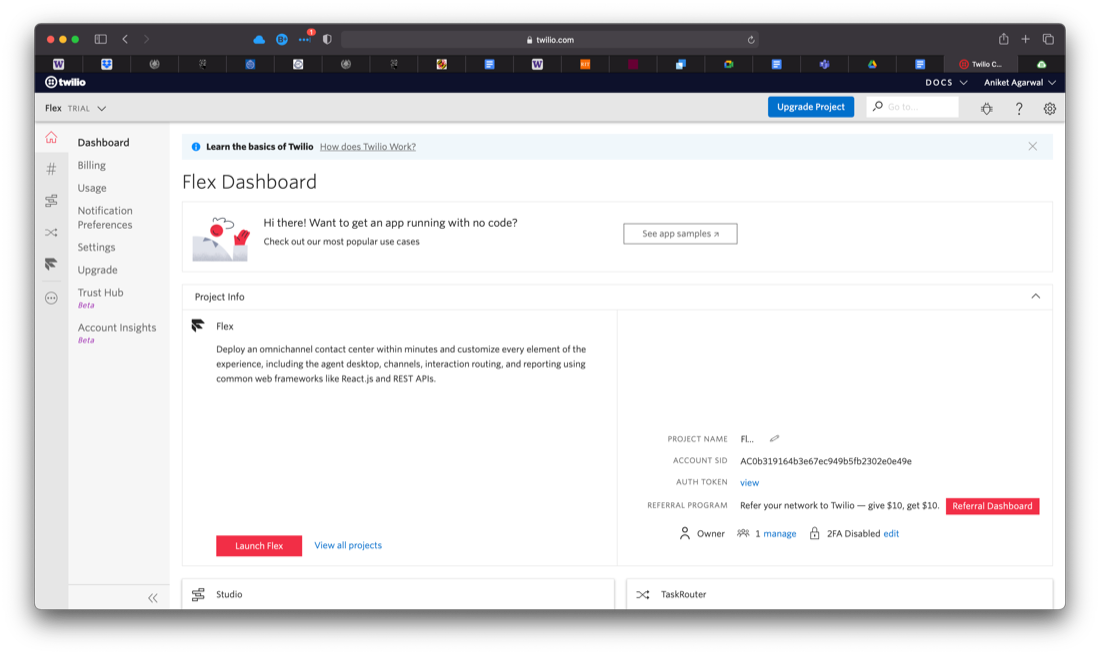
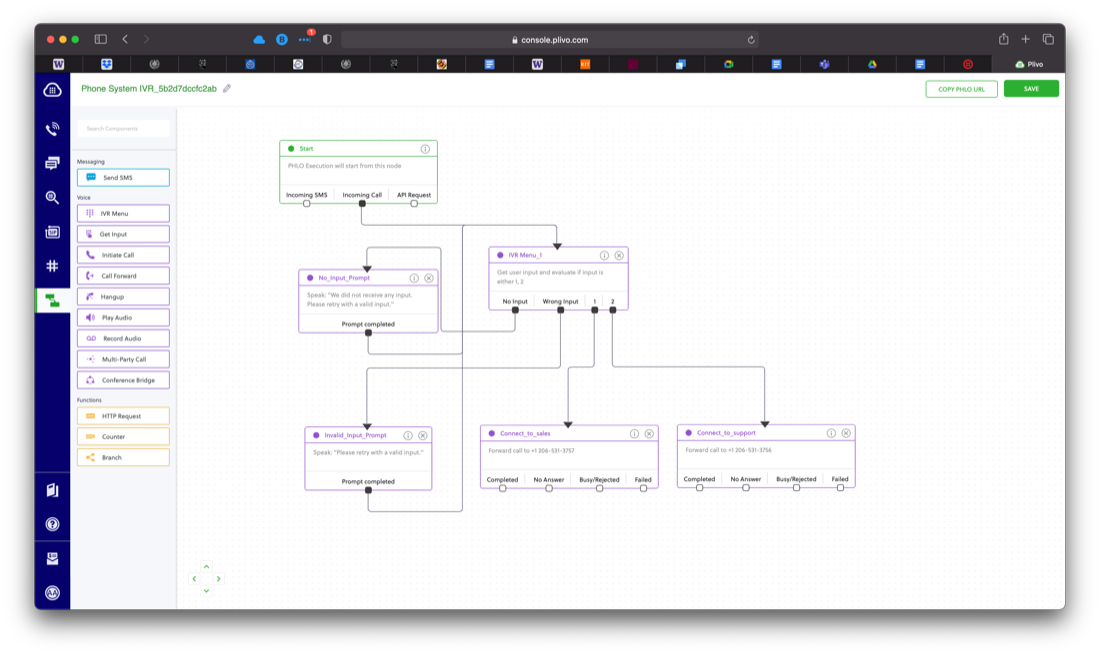
I audited Twilio, Plivo and MessageBird. I mapped each one's user journey and ran a heuristic evaluation against it. Twilio's and Plivo's builders are powerful, but they're made for engineers reading API docs, not for someone trying to route a support line. Both had the same three gaps.
- ChannelsLimited flexibility for different channels.
- BuilderA visual builder that's hard to use.
- NavigationComplex navigation to find basic features.
So every later decision got one test. Could a business owner do this alone?
03
Structure
One agreed map, with the builder as a tool every channel shares
Airtel IQ has three channels, two use cases and a set of tools they all share. Agreeing one structure for all of it took many rounds with Airtel's team.
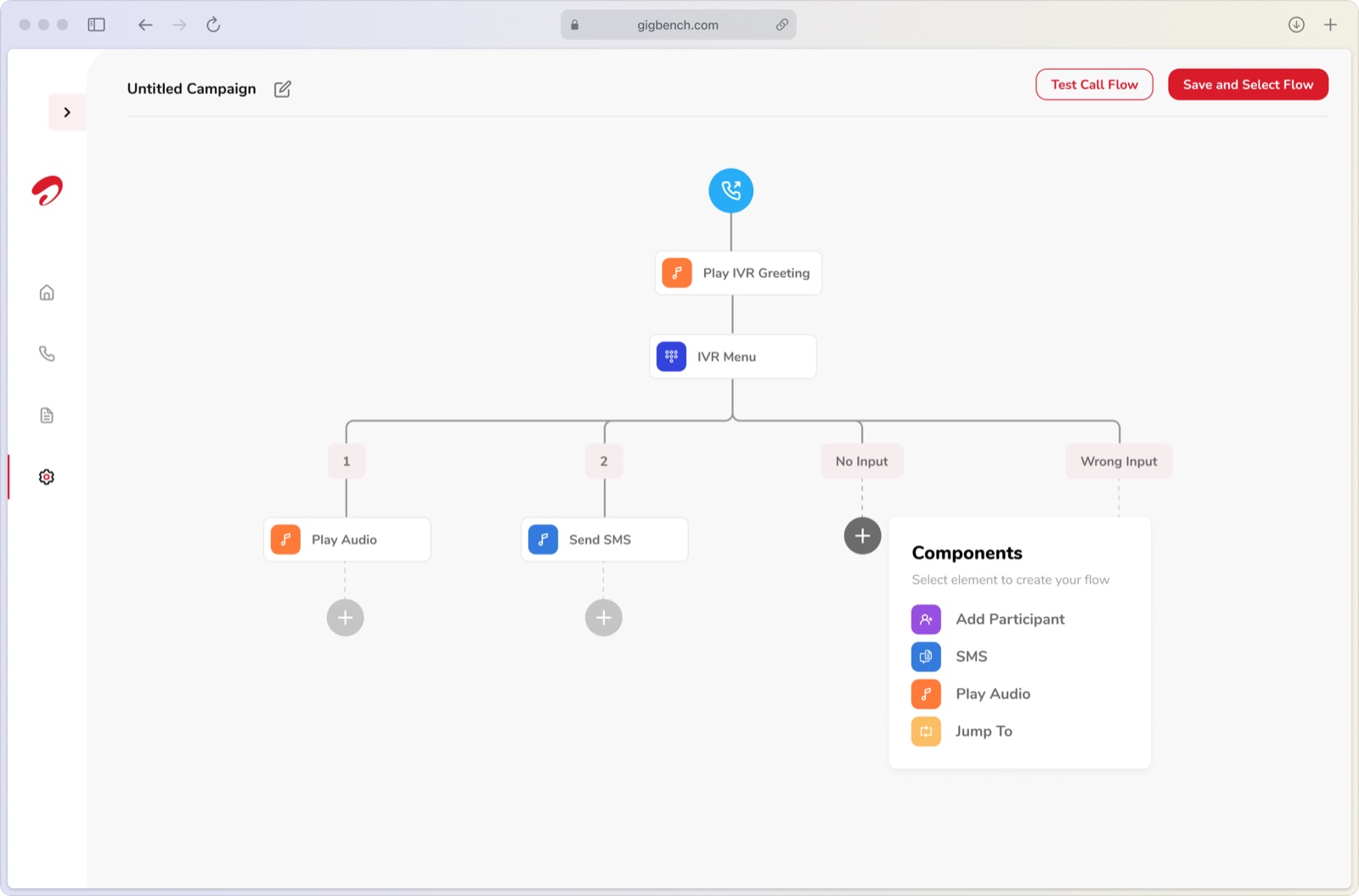
The call-flow builder is the clearest example. I argued it should be a shared tool with its own place, not a page inside one channel, because a flow can run across voice, SMS and WhatsApp. Airtel's team took some convincing. Feedback from testers settled it.
Home
- Dashboard
- Voice
- SMS
- Helpful tips
- Quick shortcuts
Channels
Voice This case study3
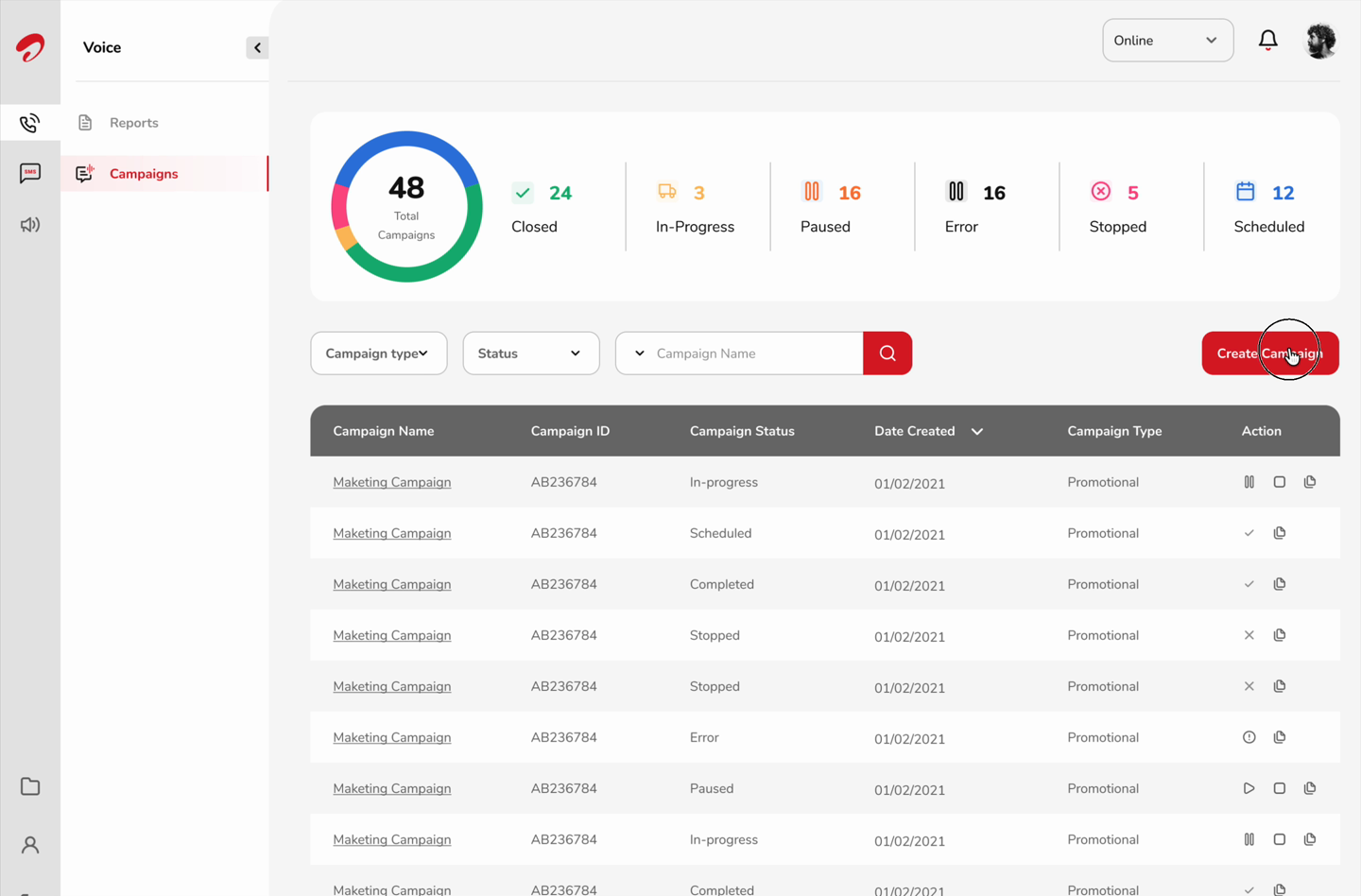
- Campaigns
- Logs
- Intelliphones
SMS3
- Campaigns
- Logs
- DLT
WhatsApp2
- Logs
- Campaigns
- In progress
- Scheduled
- Drafts
- Create campaign
Use cases
Call Centre6
- Agent console
- Manage IVR
- Manage campaign
- Monitoring
- Reports
- Settings
Virtual Receptionist2
- Reports
- Logs
- Call flow
- Create flow
- Drafts
- Reports
Tools
Call Flow Builder This case study2
- My flows
- Pre-defined templates
Contactbook2
- Contacts
- Blacklist
My Numbers3
- My numbers
- Buy numbers
- Manage numbers
Support and account
Support Centre2
- FAQs
- Tickets
APIs2
- Voice
- SMS
My Account3
- Account settings
- Users
- Sub-users
- Permissions
- Groups
- Billing
- Reporting
- Invoice view
- Payment subscription
- Technical settings
- Account settings
04
The trial
I kept the trial to one simple path, to find out if anyone wanted this
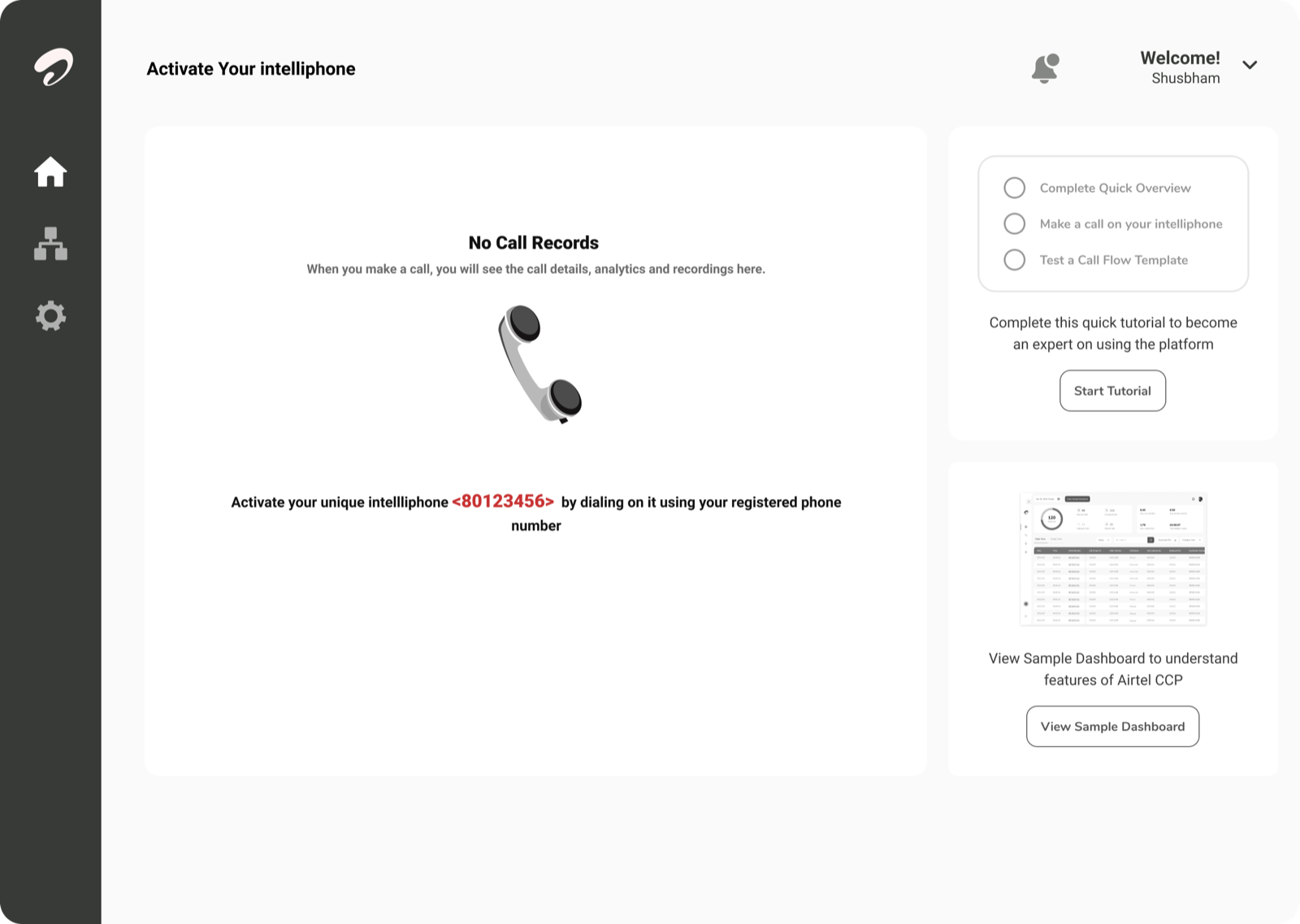
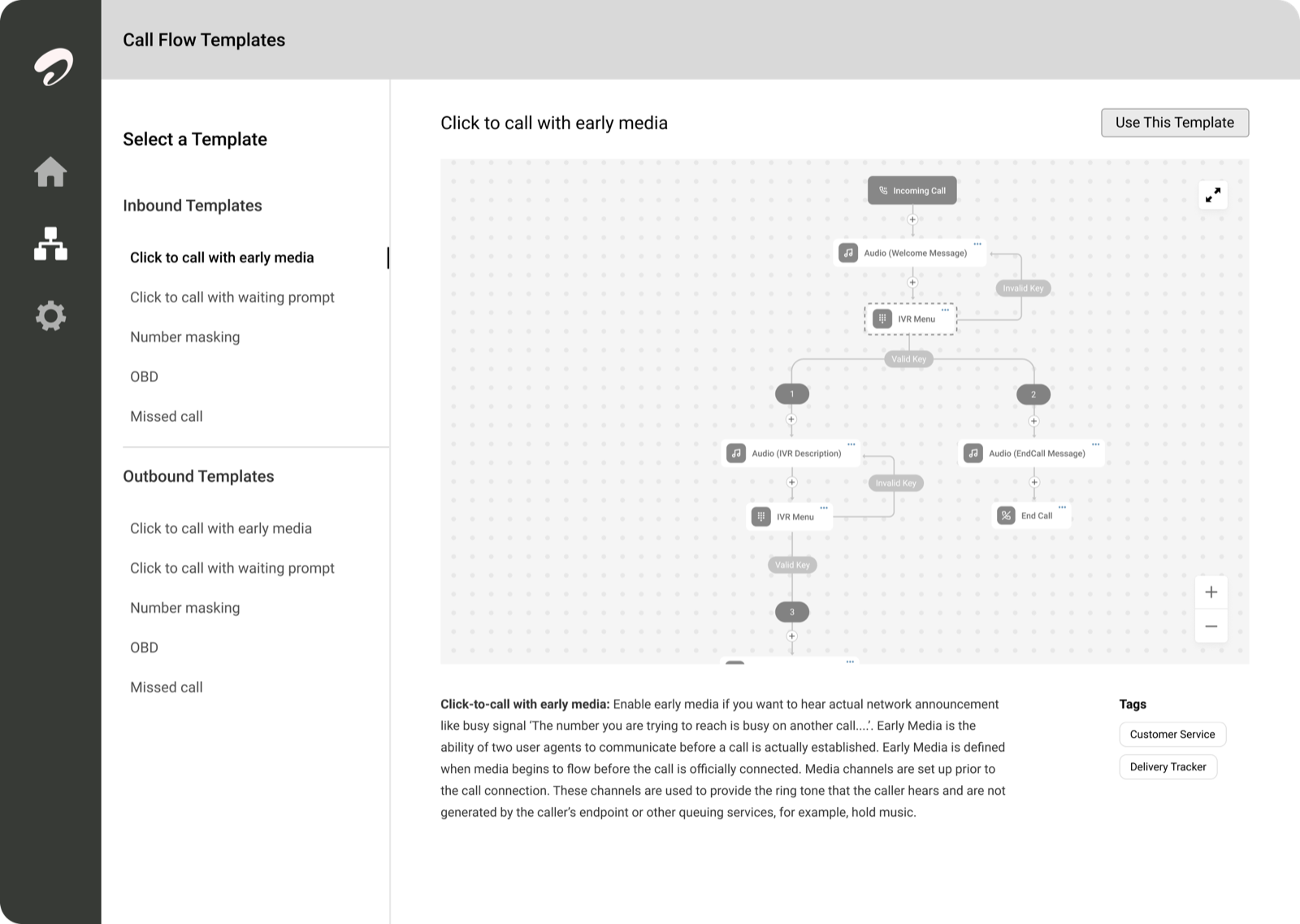
The trial is self-serve. Register, and Airtel IQ gives you a working test number, an "intelliphone", before you commit to anything. That part wasn't my decision. Keeping it to one linear path was. The trial had a question to answer before the builder got built. Did the market want call-flow templates and a no-code builder? One simple path was the quickest way to find out.
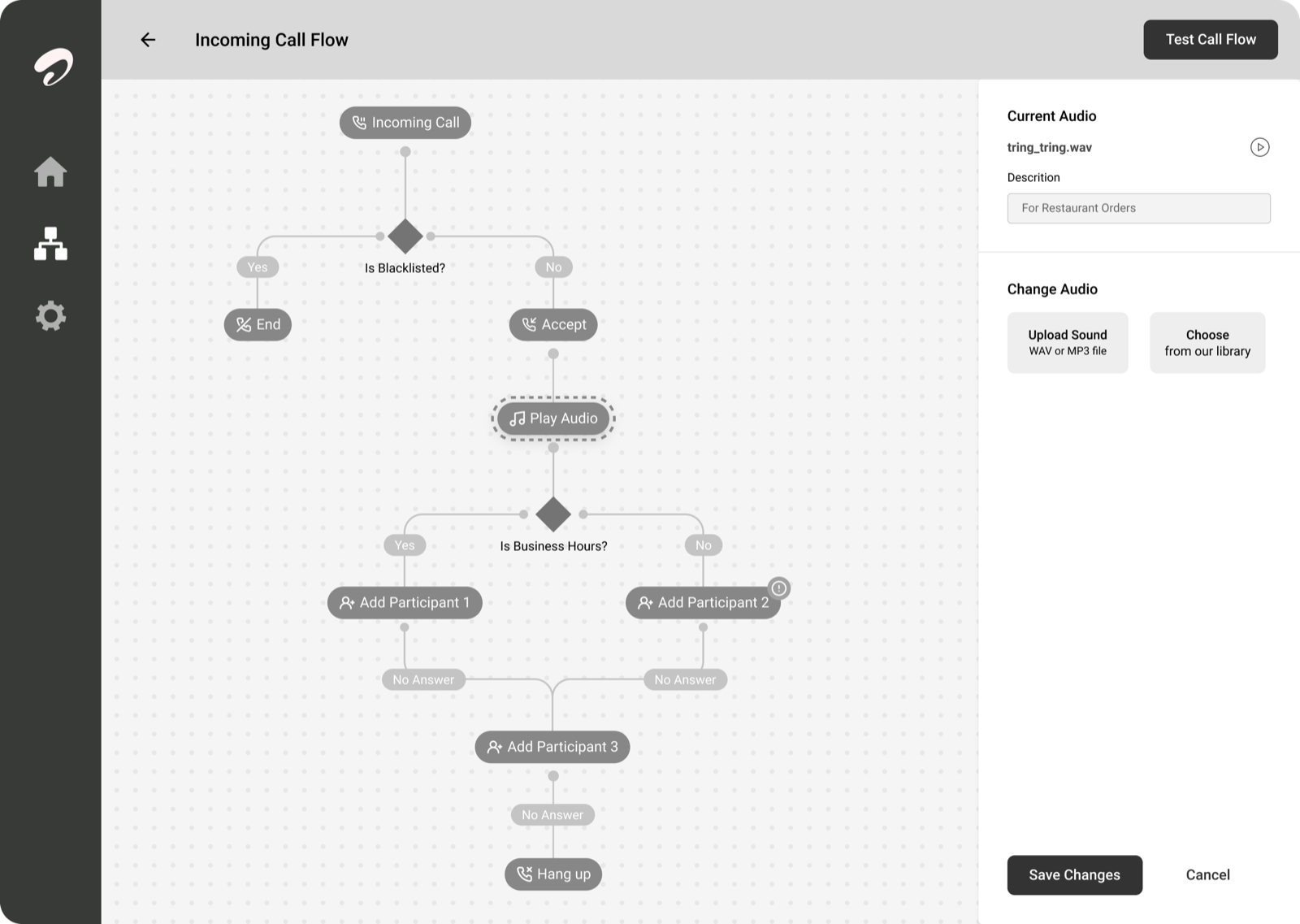
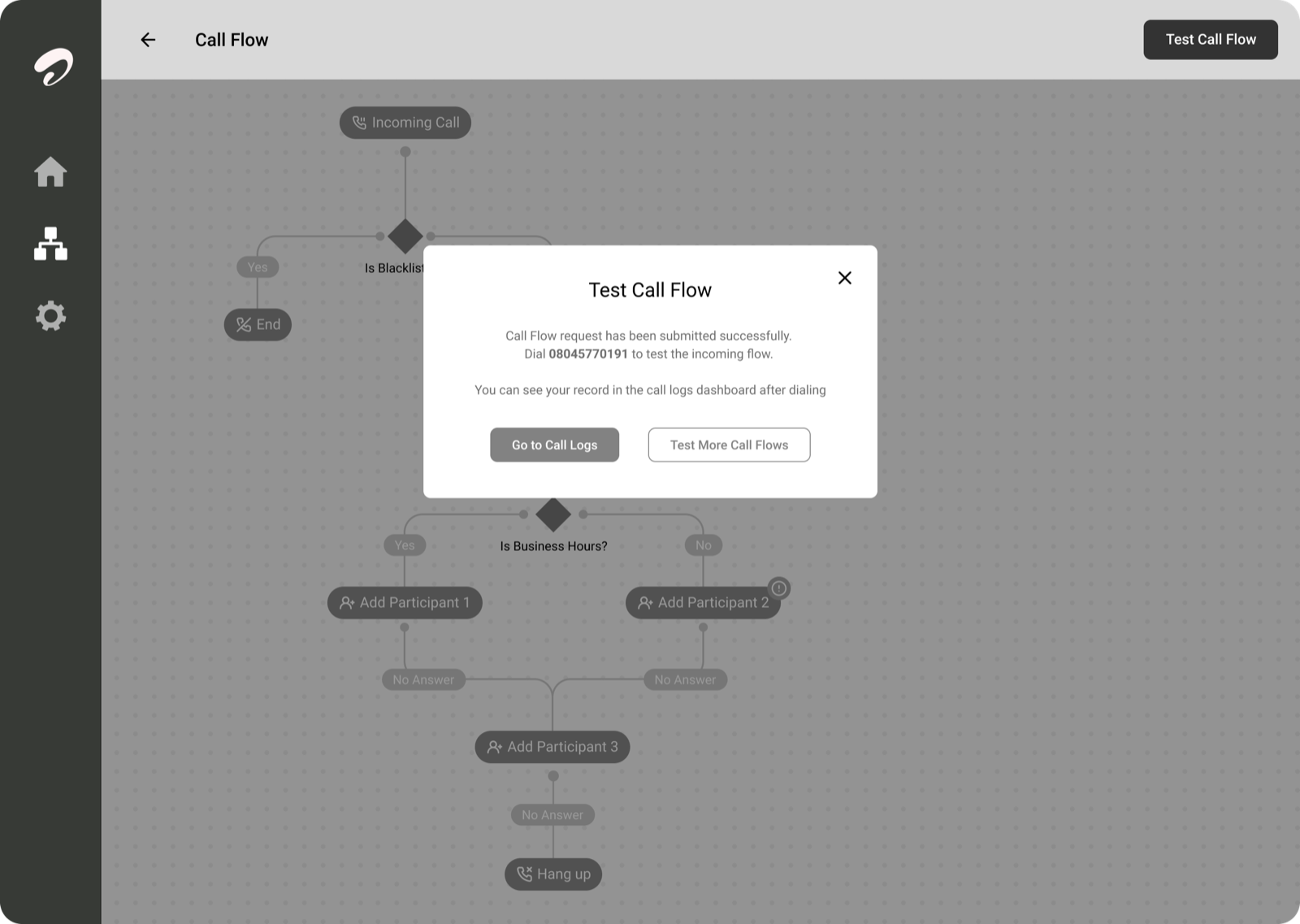
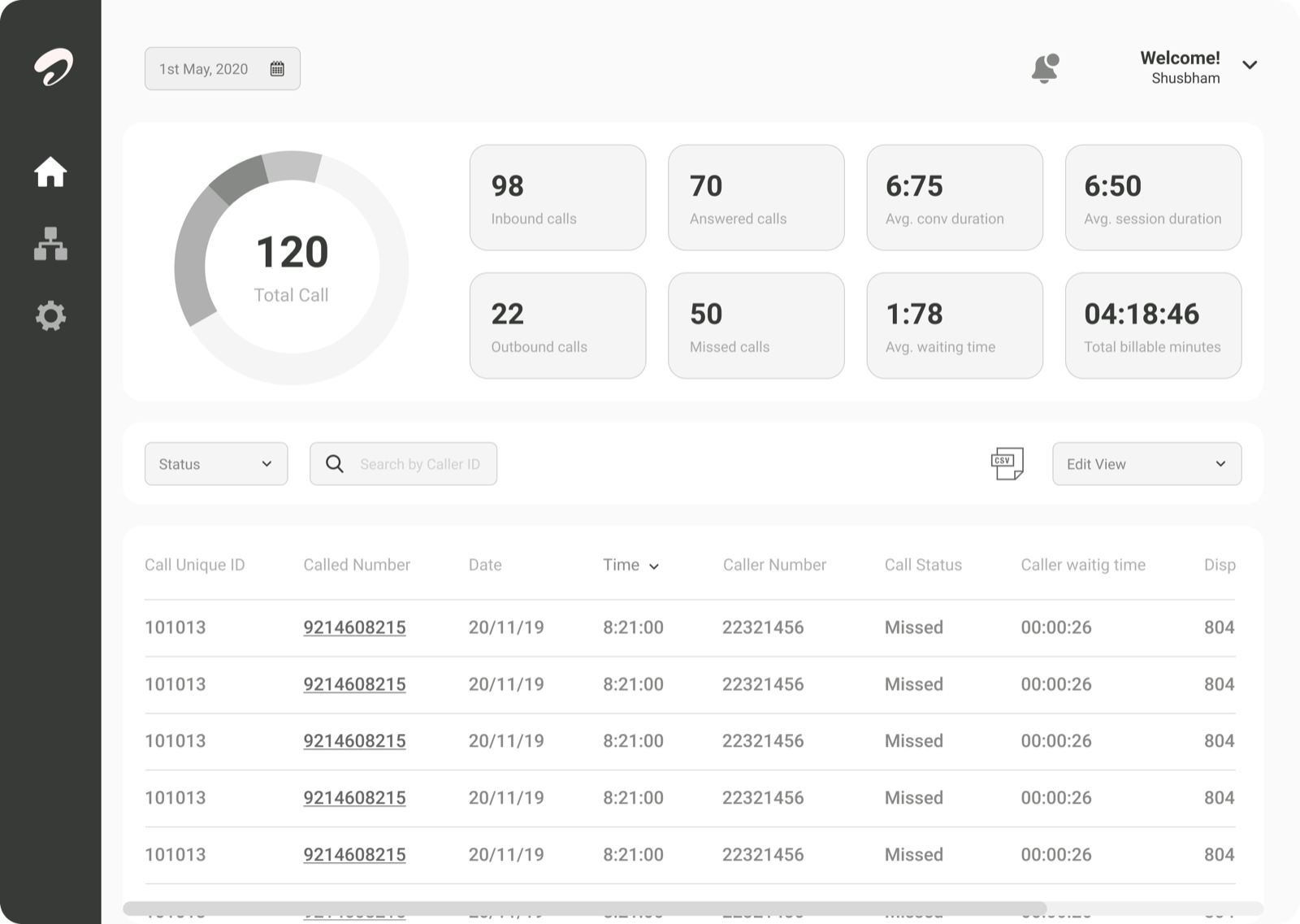
So nobody starts from a blank canvas. You activate the number by calling it, pick a ready-made template with a live preview, and edit the flow: reroute a branch, swap the audio, add or remove a step. Testing gives you a real number to dial, so you hear your own configuration as an incoming call. Then the call shows up in your logs, with the same metrics a paid account gets.
More than 1,000 businesses signed up. That started the next phase, the full platform.
Passed on
An empty builder as the first screen. With templates, the first thing a business does is edit a flow that already works.
05
The builder
Two card layouts lost to a tree that arranges itself
Two directions came first. A few rounds of client and user feedback ruled both out.
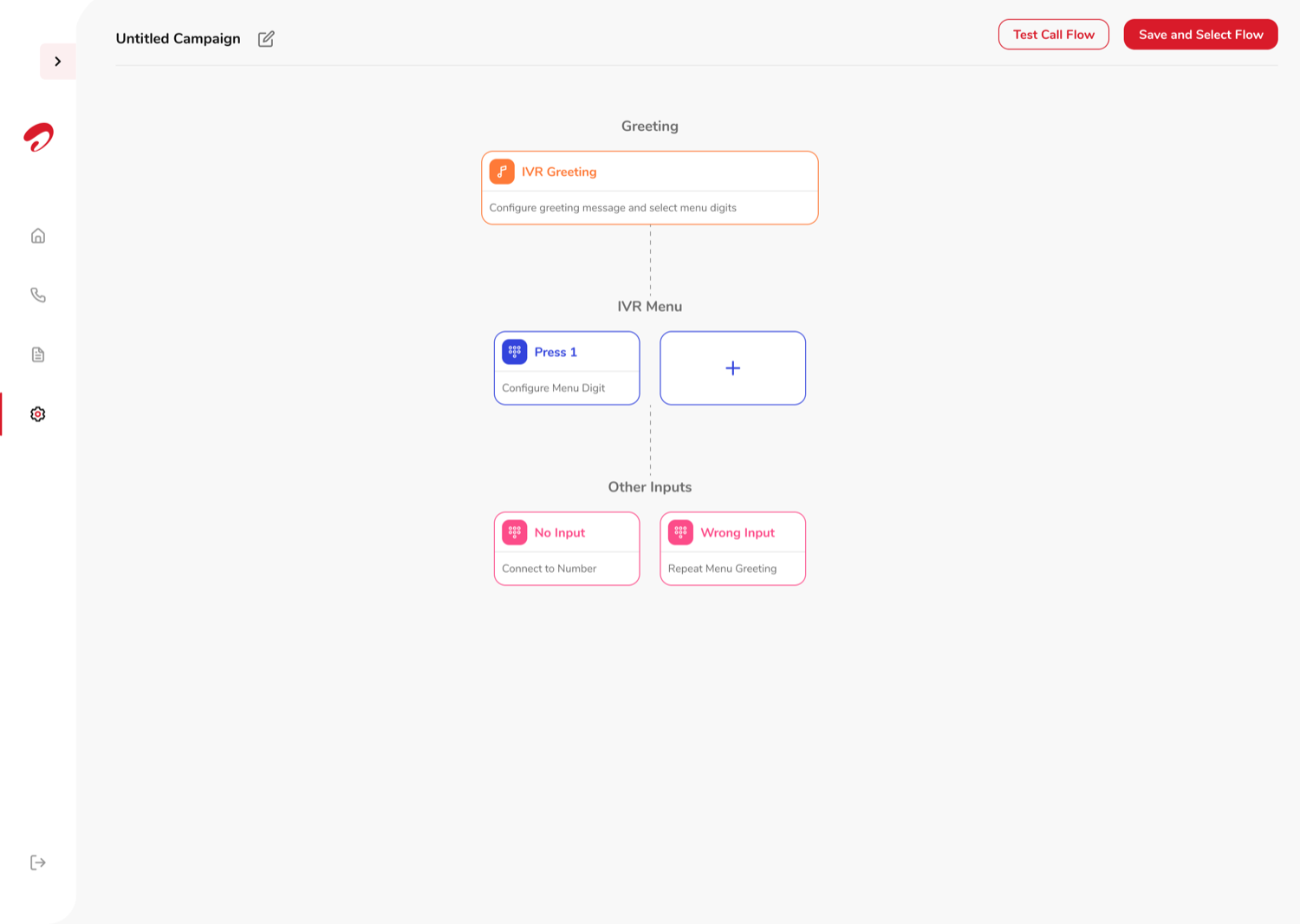
Sectioned cards laid the call out in named parts: greeting, menu, other inputs. That worked for a plain IVR and nothing more. Adding an agent, sending an SMS or jumping between flows didn't fit. Neither did a flow that goes back and forth between menus.
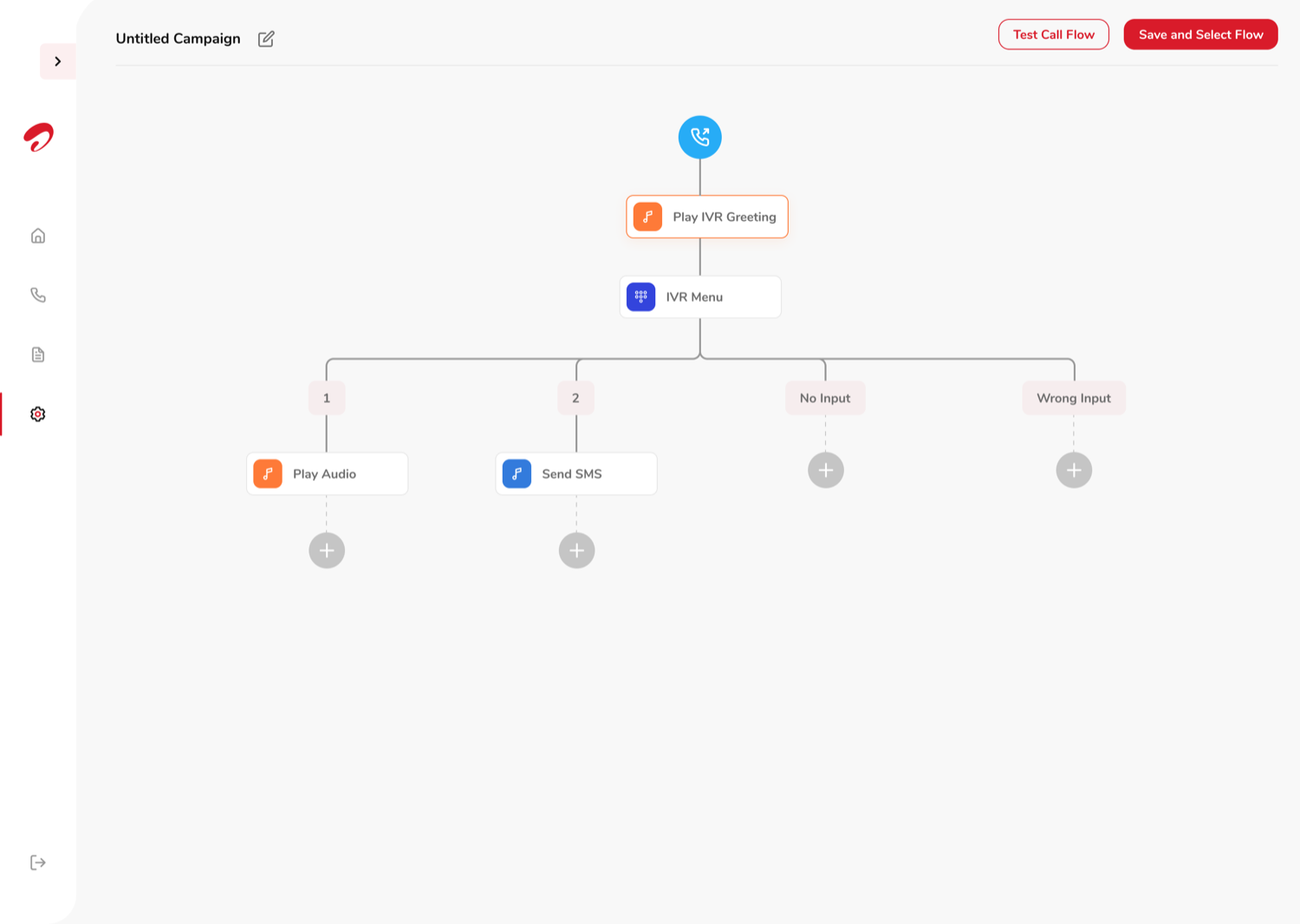
Big cards held a whole step each, with a connector leaving the card for every outcome. They got messy to build and maintain, worst of all for IVR menus with nine or ten options.
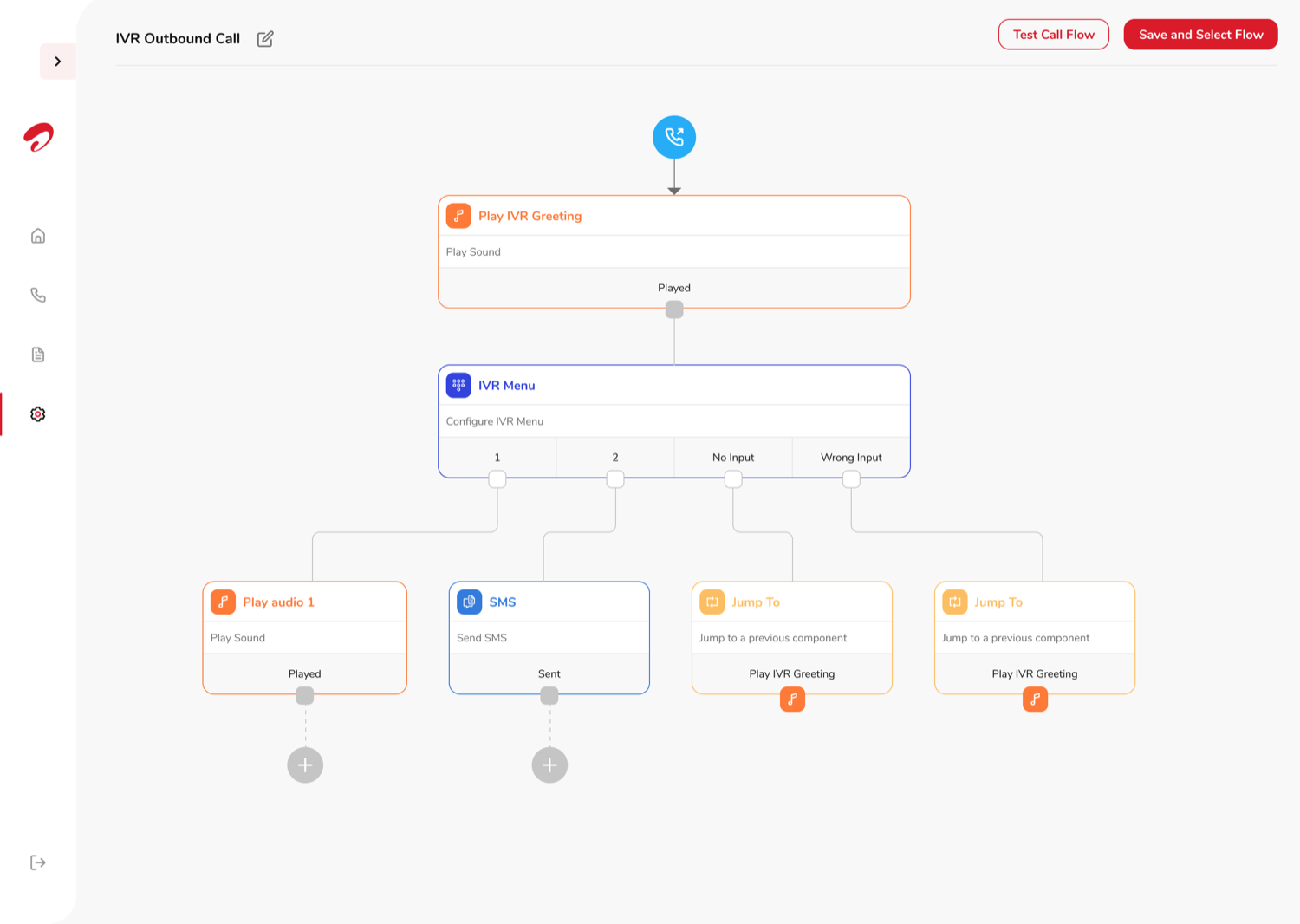
The shipped builder is a node tree because it handles both. A simple flow stays simple and a complex one still fits. Nodes arrange themselves, the canvas follows the node you click, and zooming out is optional.
06
Results
Swiggy, Justdial and Rapido signed on during the beta
So did Urban Company, Havells and Dr Lal PathLabs.
125%
More end users in the first six months
1,000+
Businesses signed up for the trial
Enterprise
Most trial businesses went on to ask for the paid plan
ETTelecom · The Economic Times
Airtel eyes big part of $1 bn cloud communication mkt with Airtel IQ for enterprises
telecom.economictimes.indiatimes.com (opens in a new tab) ↗Airtel press release · 26 October 2020
Airtel enters the $1 billion Indian cloud communications market with Airtel IQ
"Swiggy, Urban Company, Justdial, Rapido, Havells among early customers"
airtel.in (opens in a new tab) ↗Takeaway
Involve engineering before you fall in love with a flow
Airtel's engineers were in from the start, not brought in once the designs were done. That kept us from designing configuration options the platform couldn't support. Technical limits showed up as constraints to design around, not as rewrites.
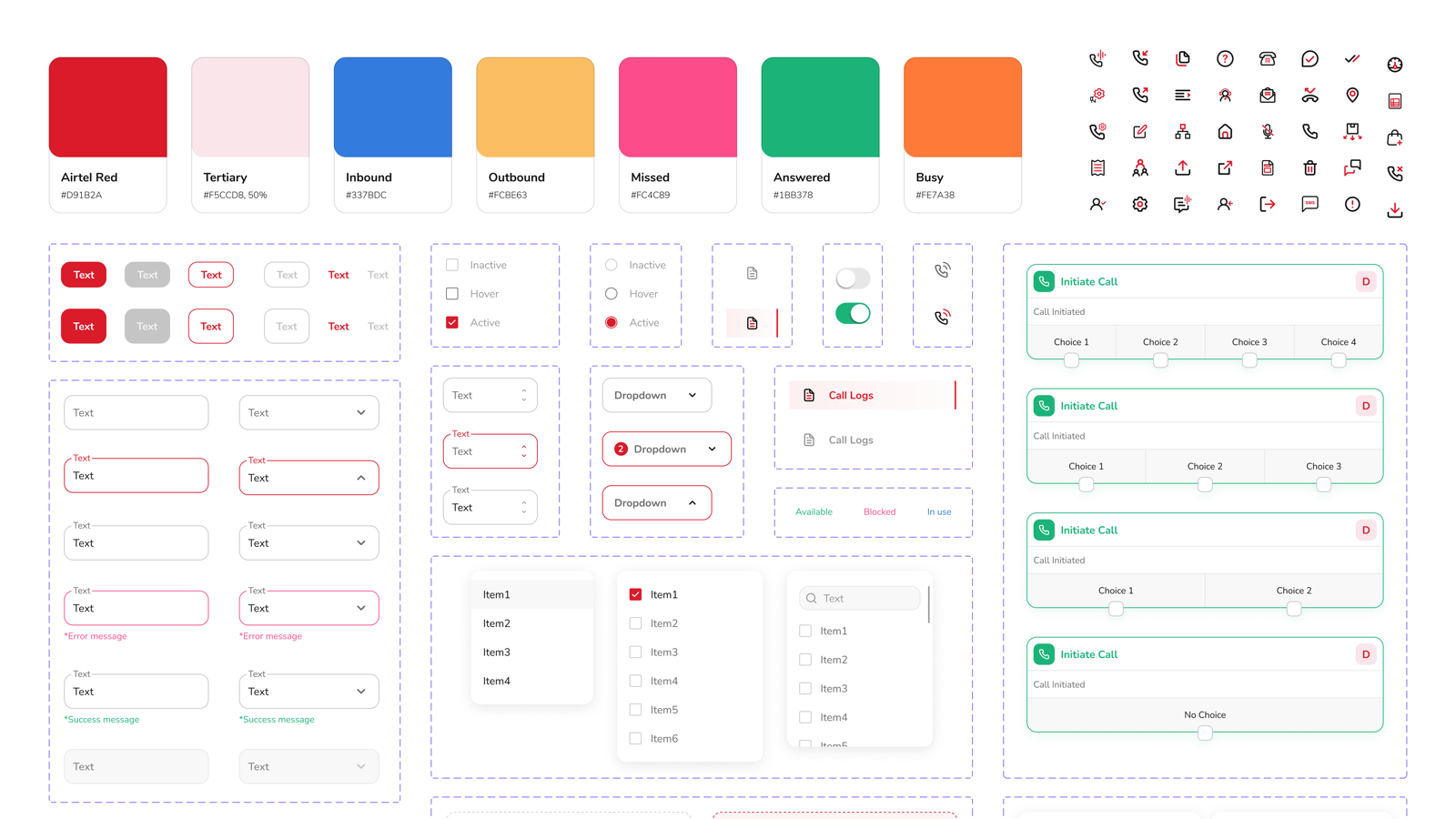
The other bet that paid off was borrowing the look of Airtel's existing dashboards for the trial and the builder, not inventing a new one. A familiar shell meant people spent less effort learning the interface and more on building a call flow that works.